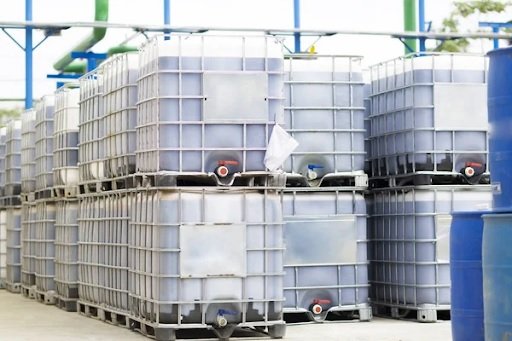
In today’s industrial landscape, safety, efficiency and compliance are paramount. Chemical storage and transportation present significant challenges, particularly when dealing with hazardous substances. Intermediate bulk containers (IBCs) have emerged as a critical solution, offering secure, versatile and cost-effective storage options for a wide range of chemicals. The use of chemical ibc storage packaging not only safeguards the materials but also ensures environmental protection and regulatory compliance.
Understanding Intermediate Bulk Containers (IBCs)
Intermediate bulk containers, commonly known as IBCs, are industrial-grade storage and transport solutions designed for bulk liquids, powders and granulated substances. Their widespread adoption across industries is due to their ability to combine large capacity with practical handling features. Constructed from plastic, metal or composite materials, IBCs provide a robust solution for transporting substances including agricultural chemicals, cleaning agents, petroleum products and pharmaceutical ingredients.
Types of IBC Materials
The choice of material significantly affects the performance and suitability of IBCs for different chemical applications.
Plastic IBCs are typically made from high-density polyethene (HDPE), offering excellent chemical resistance. They are lightweight yet strong, making them ideal for storing and transporting hazardous liquids safely.
Metal IBCs, often crafted from stainless steel, provide superior durability and the ability to withstand extreme conditions. These containers are particularly suited for highly reactive or corrosive chemicals, providing an extra layer of safety.
Composite IBCs combine a plastic inner container with a surrounding metal cage, offering enhanced structural integrity. This hybrid design is widely used for transporting dangerous goods that require both resilience and security during transit.
Key Features and Benefits of Chemical IBC Storage Packaging
Chemical IBCs are valued for a combination of efficiency, safety, and sustainability.
Space efficiency is a major advantage. IBCs are designed to be stackable, maximising storage capacity and optimising warehouse space. Their compact design can also reduce overhead costs associated with storage and logistics.
Versatility is another benefit. IBCs accommodate a wide variety of materials, from liquids to powders and granulated substances. Standardised designs allow easy integration into existing handling processes, making logistics more streamlined.
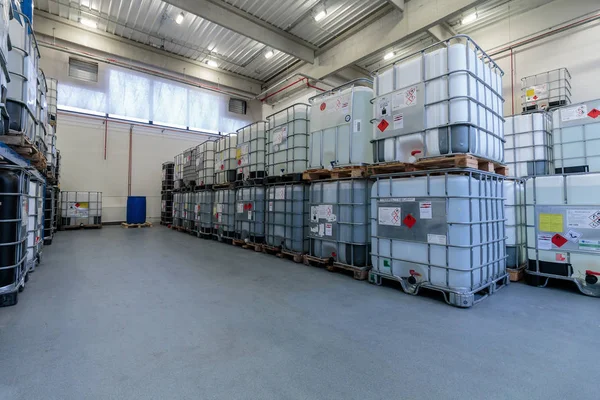
Safety is a critical feature of chemical IBCs. Containers undergo rigorous testing to prevent leaks and spills, protecting workers, facilities, and the environment from contamination. These safety measures also support compliance with stringent industry standards.
Sustainability is increasingly important in modern industries. Many IBCs are reusable, helping to minimise waste. At the end of their lifecycle, plastic components can often be recycled, contributing to environmentally friendly operations and responsible chemical management.
Regulatory Compliance
Handling and transporting chemicals require adherence to strict regulations to prevent accidents and environmental hazards. Chemical IBC storage solutions are engineered to meet international safety standards, including the United Nations Recommendations on the Transport of Dangerous Goods and the European Agreement concerning the International Carriage of Dangerous Goods by Road (ADR). Using compliant IBCs ensures that personnel are protected, environmental risks are minimised, and businesses remain legally compliant.
Applications Across Industries
IBCs are used across a wide range of sectors due to their adaptability and reliability.
In agriculture, IBCs are essential for safely transporting and storing fertilisers, herbicides, and pesticides, supporting sustainable and efficient farming practices.
Chemical manufacturing relies heavily on IBCs for the temporary storage and transportation of raw chemicals and finished products. Their durability and standardised design simplify logistics while maintaining safety.
Food and beverage industries use food-grade IBCs for liquids such as syrups, oils and vinegars. These containers maintain product quality and prevent contamination, supporting food safety standards.
Pharmaceutical companies utilise IBCs to transport sensitive active pharmaceutical ingredients (APIs) and other medicinal substances. The containers ensure that products remain uncontaminated and intact throughout the supply chain.
Innovations in IBC Design
Recent technological advancements have further enhanced the functionality and safety of chemical IBC storage packaging.
Smart IBCs now feature sensors and tracking systems, enabling real-time monitoring of contents, temperature and pressure. This technology improves inventory management and ensures optimal conditions for sensitive chemicals.
Improved valve systems are another innovation. Modern valves prevent leaks, facilitate easier handling during loading and unloading, and reduce the risk of exposure to hazardous materials. These enhancements improve operational efficiency while maintaining safety standards.
Choosing the Right IBC
Selecting the right IBC depends on several factors, including the chemical type, storage conditions, transportation requirements, and regulatory considerations. Businesses must assess whether plastic, metal or composite IBCs are most suitable for their specific application. Consideration of capacity, durability and compliance with safety standards ensures the chosen container provides both protection and efficiency.
Conclusion
Chemical IBC storage packaging has revolutionised industrial storage and logistics by offering safe, efficient, and compliant solutions for handling a wide range of substances. From agriculture and chemical manufacturing to food processing and pharmaceuticals, IBCs provide versatile options that enhance operational efficiency while safeguarding personnel and the environment. Continuous innovation in IBC design, including smart monitoring and improved safety systems, ensures that industries can meet evolving safety, environmental, and regulatory challenges. Investing in high-quality chemical IBCs is not just a matter of operational efficiency; it is an essential step towards sustainable and responsible chemical management.